
Word processor
𐑢𐑻𐑛 𐑐𐑮𐑴𐑕𐑧𐑕𐑼
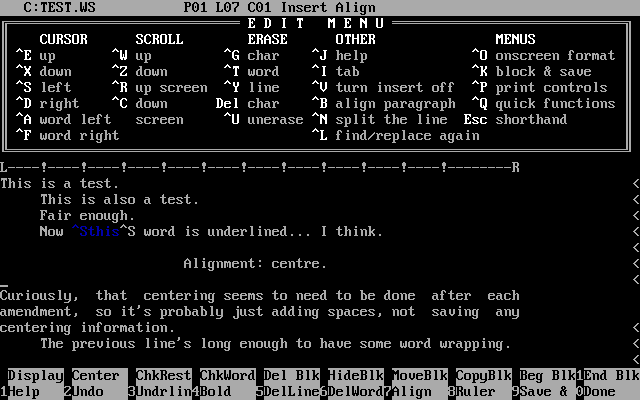
WordStar
In the 1980s, a word processor was a piece of hardware or software that you used to create printable documents, such as letters and manuscripts.
The hardware kind, such as the Philips VideoWriter, was a purpose-built machine that did nothing else but let you write, rewrite, and print lightly formatted text. The software kind, such as WordStar, turned a more expensive general-purpose PC into much the same thing for however long you were using it. Both used text mode, which neatly arranged fixed-width characters into a grid of text.
Before the hardware was considered obsolete, and the software evolved to use a GUI and encompass numerous desktop publishing features, both were little more than text editors with the added ability to centre headings, justify paragraphs, and make phrases bold or italicised.
The book and periodical publishing industries tend to segregate the very distinct stages of first writing and editing, then typesetting. A work-in-progress manuscript looks as if it was written on a humble typewriter throughout all its iterations of writing and rewriting, until it's finally set in stone. Only then is it ready to be typeset and published.
In hindsight, it was useful to have a tool you could use to quickly write and edit text, without the distraction of being able to simultaneously typeset it... and arguably is useful yet, especially when that tool's old enough to also be free of the distraction of the Internet.
1980s word processors have a sort of kindred spirit in the aforementioned text editors, which are still used by programmers. Programming is, after all, a very specific kind of writing, using plain text files with absolutely no formatting of any kind. As such, I recommend authors investigate text editors as a simpler alternative to modern word processors, stripping back text editing to the bare essentials.
The quickest text editors and word processors alike (such as vi and WordStar, respectively) still show up their GUI-based descendants as an unbearably slow alternative. They're so geared towards letting writers write that they let you zip around the document without having to stretch your fingers any further than the main block of alphanumeric keys, and often without even having to lift them off the home row of keys in particular. They're a touch typist's dream, letting you capture your ephemeral thoughts as quickly as they materialise, before they disappear back into the crevices of your mind.