Discworld
𐑛𐑦𐑕𐑒𐑢𐑻𐑤𐑛
Discworld is a popular series of comedy fantasy novels written by Terry Pratchett.
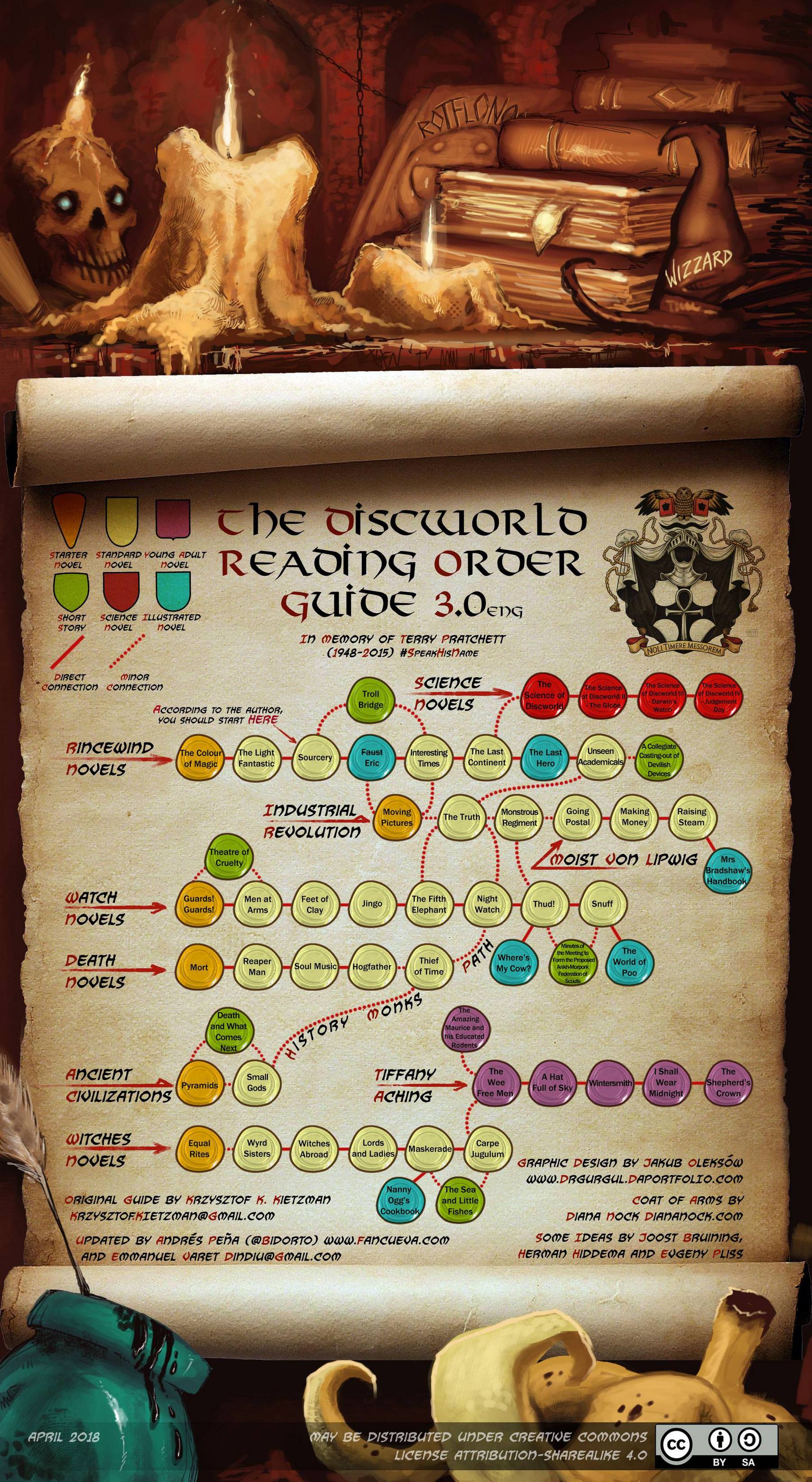
As there are forty-one novels in the series, it can be helpful to focus on a more manageable subset of them at a time. These include:[1]
- Rincewind (the inept wizard)
- The Colour of Magic
- The Light Fantastic
- Sourcery
- Interesting Times
- The Last Continent
- Unseen Academicals
- Witches
- Equal Rites
- Wyrd Sisters
- Witches Abroad
- Lords and Ladies
- Maskerade
- Carpe Jugulum
- Death (as in the Grim Reaper)
- Mort
- Reaper Man
- Soul Music
- Hogfather
- Thief of Time
- Ancient civilisations
- Pyramids
- Small Gods
- The Watch (police procedurals)
- Guards! Guards!
- Men at Arms
- Feet of Clay
- Jingo
- The Fifth Elephant
- Night Watch
- Thud!
- Snuff
- The industrial revolution, part 1
- Moving Pictures
- The Truth
- Monstrous Regiment
- The industrial revolution, part 2: Moist von Lipwig (the reformed con artist)
- Going Postal
- Making Money
- Raising Steam
And that's not even counting the young adult novels, science novels, illustrated novels, short stories, or diaries, let alone anything else by Pratchett outside of the Discworld series.
Discworld started out as a parody of fantasy tropes, but once Pratchett was a few novels in, it started to evolve into original fantasy worth reading in its own right. As such, I gather The Colour of Magic and its sequel The Light Fantastic aren't quite up to the higher standard of the rest of the series, so most people are advised to start with Sourcery or perhaps Equal Rites.
If you're more into police procedurals, Guards! Guards! is also considered an excellent starting point. Personally, I started with the ridiculously late-in-the-series Going Postal, but then I'm interested in geeky things like packet switching.
I'm not generally into fantasy, as I find it difficult to suspend my disbelief about the supernatural. The lighthearted comedy tone of the series certainly helps in that regard. If it can win even me over, there's a chance for anyone.
Pratchett infused his novels with wonderful Douglas Adams esque digressions, asides, and turns of phrase. While they ostensibly wrote in different genres, Adams in (mostly) science fiction, and Pratchett (mostly) fantasy, their worlds are on a par with each other, filled with fanciful whimsy that's plain fun.
They're also surprisingly filled with life lessons. Alas, I couldn't get into them until my forties, perhaps because I wasn't wise enough.
References
- "The Discworld Reading Order Guide V3.0" Krzysztof K. Kietzman, Andrés Peña, Emmanuel Varet, Jakub Oleksów, Diana Nock, Joost Bruining, Herman Hiddema, Evgeny Pliss
Terry Pratchett: Discworld